
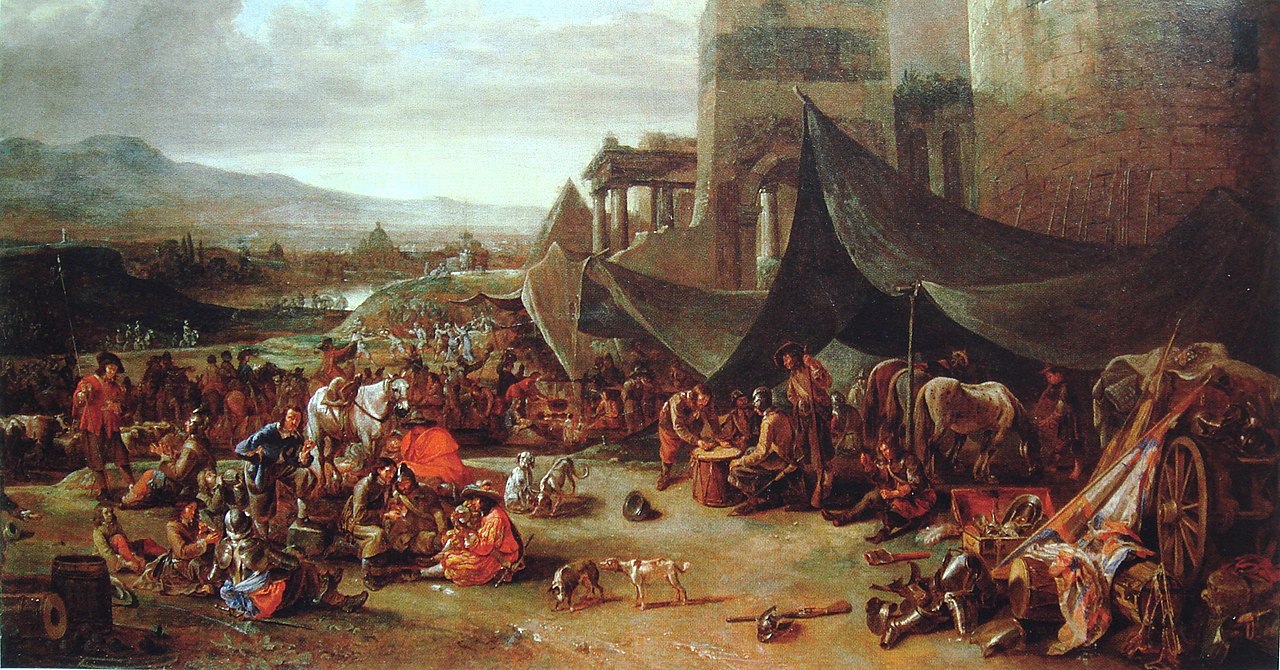
The Sack of Rome, 1527
Johannes Lingelbach · Public domain
This painting by Johannes Lingelbach, executed in the seventeenth century, depicts the Sack of Rome, carried out from 6 May 1527 by the imperial troops of Charles V, then commanded by the Constable of Bourbon, the French king Francis I's former vassal turned rebel. Killed in the very first moments of the assault, Bourbon left an army without a leader or pay to run riot through the city in an act of plunder of unprecedented violence, one that was to last nearly a year and force Pope Clement VII to take refuge in Castel Sant'Angelo before capitulating. Produced roughly a century after the events, the work belongs to a pictorial tradition that continued long afterwards to give dramatic form to this sack, remembered as one of the most violent in modern European history. The episode, which occurred at the height of the conflict pitting the League of Cognac — of which France was a member — against the emperor, deeply shocked the whole of Europe, including Charles V himself, who had never wished for such devastation.