

Carolingian dynasty
751–887, 898–922, 936–987
The Carolingian dynasty takes its name from Charles Martel and later his grandson Charlemagne, its most illustrious figures. Built on the power gained by the Austrasian mayors of the palace, it acceded to the Frankish throne in 751 when Pepin the Short deposed the last Merovingian king. Its height under Charlemagne, crowned Emperor of the West in 800, was followed by the empire's gradual fragmentation, sealed by the Treaty of Verdun in 843. Weakened by minor kings and challenged by the rising power of the Robertians, the dynasty ended in France in 987 with the election of Hugh Capet.
Key figures

Charles Martelv. 688–741Mayor of the palace, founder of Carolingian power; victory at Poitiers (732)

Pepin the Shortv. 714–768First Carolingian king, crowned in 754; deposed the last Merovingian king
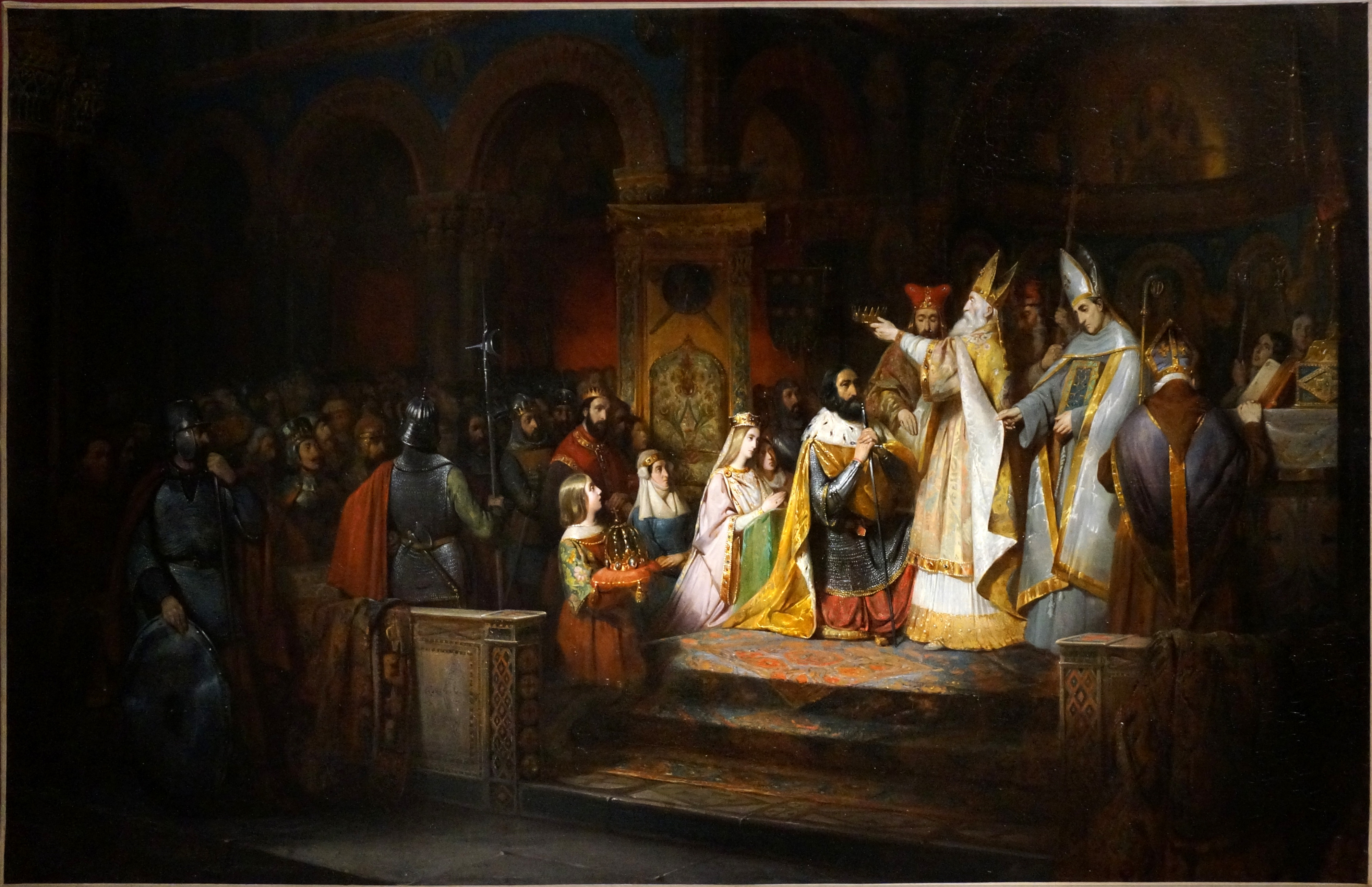
Charlemagne742–814The most illustrious Carolingian; crowned Emperor of the West in 800

Louis the Pious778–840Son of Charlemagne; reign marked by internal conflicts over the division of the empire

Charles the Bald823–877Received West Francia at the Treaty of Verdun (843), ancestor of the kingdom of France
Charles the Simple879–929Ceded the lower Seine to the Viking chief Rollo in 911, giving rise to Normandy
Louis V the Do-Nothingv. 966–987Last Carolingian king, died accidentally without an heir; succeeded by Hugh Capet
Key events
732Charles Martel's victory at Poitiers against Umayyad forces
751Pepin the Short deposes Childeric III and becomes King of the Franks
800Charlemagne crowned Emperor of the West in Rome
843Treaty of Verdun: division of the Carolingian empire into three kingdoms
888Robertian interruption: Odo elected King of West Francia
911Charles the Simple cedes the future Normandy to the Viking chief Rollo
987Death of Louis V; Hugh Capet is elected king, beginning of the Capetian dynasty